

Septic System Repair & Troubleshooting in NJ
FREE ESTIMATES | LICENSED AND CERTIFIED | FREE SITE EVALUATIONS
Get a Free Estimate
"*" indicates required fields

When your septic system shows warning signs—slow drains, sewage odors, or wet spots in your yard—you need fast, accurate diagnostics and repairs that fix the problem right the first time. Excavating New Jersey LLC provides licensed septic system repair services throughout Sussex County and Northern NJ, with nearly 20 years of experience diagnosing and solving septic failures in the region’s challenging soil conditions.
Dealing With Septic System Problems in Northern New Jersey?
We solve these common septic emergencies and failures:
- Sewage backing up into your home or surfacing in your yard
- Slow drains throughout the house that pumping doesn’t fix
- Wet spots or standing water over your drainfield during dry weather
- Sewage odors near your tank or around your property
- Failed home inspections requiring repairs before closing
- Distribution box problems from frost heave or settling
We diagnose the real problem—not just the symptoms—and provide honest repair options from simple component fixes to complete system solutions.
Complete Septic System Repair Services
Emergency Septic Diagnostics & Troubleshooting
When sewage backs up or your system fails completely, we respond fast. Our licensed technicians perform dye testing, camera inspections, and component evaluations to identify the exact failure point—whether it’s a clogged filter, damaged baffle, tilted distribution box, or drainfield failure. You get clear answers and repair options within 24 hours.
Septic Tank Component Repairs
Cracked baffles, damaged inlet/outlet pipes, and broken tank lids cause failures that look worse than they are. We replace deteriorated components that allow solids to escape into your drainfield or let groundwater infiltrate your tank. These repairs typically cost $500-$1,500 and prevent expensive drainfield damage down the road.
Distribution Box Leveling & Repair
Frost heave in Sussex, Morris, and Warren Counties frequently tilts distribution boxes, causing uneven flow that overloads certain drainfield trenches. We excavate, level, and properly reset your D-box to restore balanced distribution across all trenches. This is one of the most common—and most fixable—septic problems in Northern NJ.
High-Pressure Water Jetting for Septic Lines
Biomat buildup and root intrusion can clog distribution lines without requiring full drainfield replacement. Professional hydro-jetting clears blockages and restores flow in systems with partial failures. Success rates are highest for systems under 25 years old with localized blockages rather than complete drainfield collapse.
TerraLift Soil Fracturing & Drainfield Restoration
When your drainfield soil has become compacted or saturated, TerraLift technology can restore percolation without excavation. High-pressure air injections fracture compacted soil layers and reopen drainage pathways. This works exceptionally well in Northern NJ’s glacial till soils where compaction—not just biomat—causes failure. Cost runs $3,500-$6,000 versus $15,000+ for drainfield replacement.
Effluent Filter Cleaning & Replacement
A clogged effluent filter mimics drainfield failure symptoms but costs only $150-$300 to service. Modern septic systems include filters at the tank outlet to protect your drainfield. These require cleaning every 3-5 years. We check filters first before recommending expensive repairs.
Why Sussex County Homeowners Trust Excavating New Jersey LLC
Nearly 20 years of septic services and repair experience in Northern NJ. We’ve diagnosed and repaired hundreds of septic failures across Vernon, Sparta, Hopatcong, Andover, Jefferson, Montague, Frankford, Newton, Sussex, Wantage, and surrounding towns. We know the local soil conditions, understand regional geology, and work with area health departments daily.
Licensed, insured, and certified septic professionals. Our team holds all required New Jersey certifications and maintains full insurance coverage. We stay current on N.J.A.C. 7:9A regulations and understand the difference between repairs that need permits and those that don’t.
Honest diagnostics before expensive recommendations. We always start with the least invasive diagnostic approach: dye testing, camera inspections, and component evaluations. If your problem is a $300 filter cleaning, we won’t recommend a $20,000 drainfield replacement. You get transparent assessments and multiple repair options when they exist.
Free flat-rate estimates with upfront pricing. No hourly rates that climb as work progresses. We provide complete cost breakdowns before work begins so you know exactly what you’re paying for.
We understand Northern NJ’s unique soil challenges. The glacial till, shallow bedrock, and high water tables in Sussex and Morris Counties create repair challenges that contractors from other regions don’t understand. We design solutions that work in your specific soil conditions.
Recognizing Septic System Failure: When to Call for Repairs
Emergency Signs (Call Immediately)
Sewage backing up into toilets, sinks, or tubs indicates complete blockage or drainfield failure. Standing water with sewage odor above your drainfield poses immediate health risks. Sewage smells inside your home suggest dangerous system failures. These situations require same-day professional response.
Urgent Warning Signs (Call Within 48 Hours)
Multiple slow drains throughout your house suggest septic problems, not just plumbing issues. Soggy areas appearing over your drainfield during dry weather signal hydraulic failure. Gurgling sounds when flushing toilets indicate developing blockages. Early diagnosis often means $1,500 repairs instead of $20,000 replacements.
Maintenance Indicators (Schedule Service)
It’s been 3+ years since your last tank pumping—schedule service before problems develop. You’re buying or selling property—get inspections 60-90 days before closing. Unusually lush grass over your drainfield may indicate effluent surfacing rather than proper soil treatment.
Understanding Repair vs. Replacement Under NJ Regulations
Repairs (Typically No Permit Required)
Simple component replacements that restore original function usually don’t need NJDEP permits. This includes baffle replacement, pipe repairs, tank pumping, filter cleaning, and distribution box leveling. However, even these repairs must be performed by licensed septic installers in New Jersey—DIY work creates liability and complicates future property sales.
When Permits Are Required
Any modification that changes system capacity, design, or location requires Treatment Works Approval. This includes adding bedrooms, relocating drainfield trenches, or installing advanced treatment components. Permit review typically takes 4-8 weeks.
The Replacement Threshold
If more than 50% of your drainfield needs reconstruction, NJDEP considers it a new installation. This triggers full compliance with current N.J.A.C. 7:9A standards—potentially larger drainfield areas, increased setbacks, and advanced treatment requirements. A knowledgeable contractor can sometimes stage work to avoid crossing this threshold.
Protecting Grandfathered Systems
Older systems with reduced setbacks from wells or property lines are protected as legal nonconforming—unless replacement is triggered. A $1,500 component repair maintains your grandfathered status. A full drainfield replacement may require bringing everything to current code. This is why accurate diagnosis matters.
How Northern NJ Soil Conditions Affect Repairs
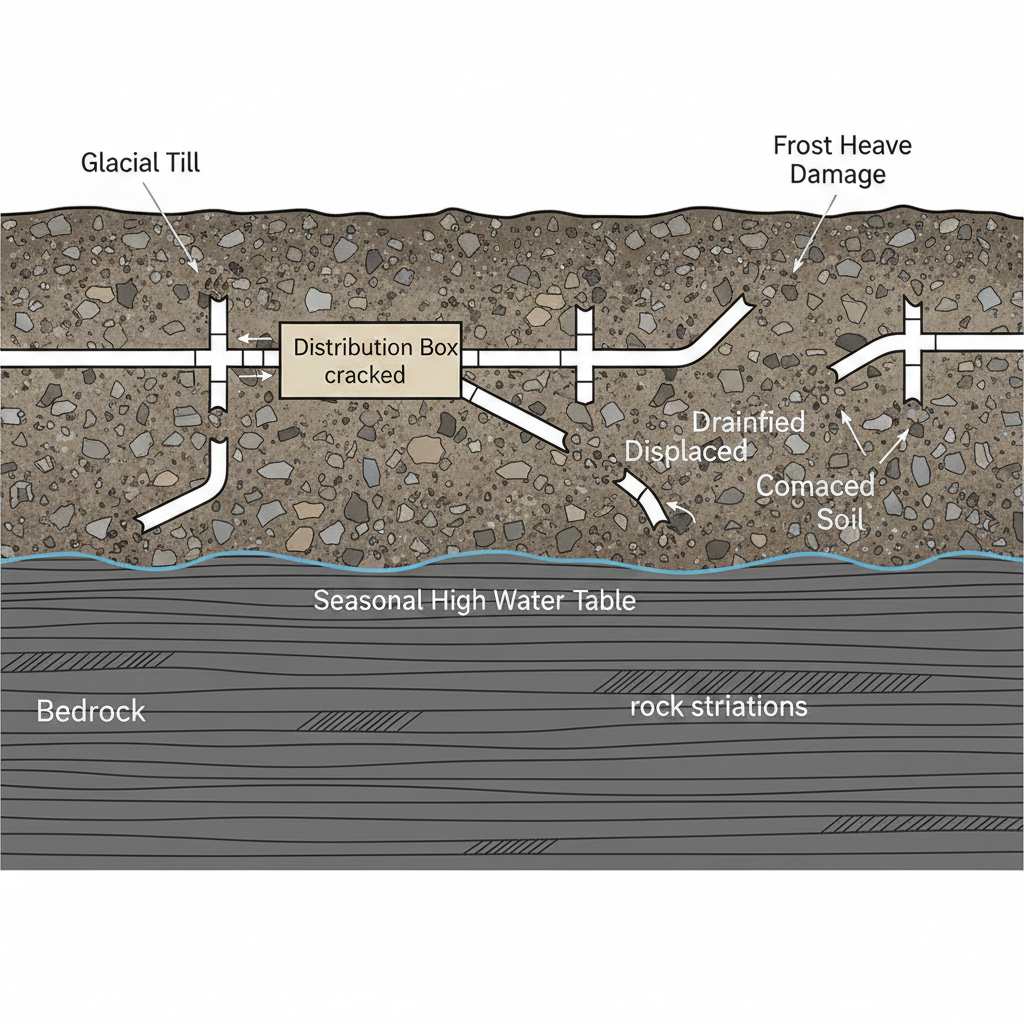
Sussex, Morris & Warren Counties: Glacial Till & Bedrock
Dense clay-rich soils with poor natural drainage make repairs more complex. Frost heave frequently damages distribution boxes and rigid pipe connections. Shallow bedrock limits drainfield depth and repair options. TerraLift soil fracturing works exceptionally well here because soil compaction—not just biomat—causes many failures.
Highlands Region Challenges
Properties in Vernon, Sparta, Wantage, and Hamburg face rocky terrain and seasonal high water tables. Many older systems were installed with inadequate vertical separation, making them vulnerable during wet springs. Repairs often require engineered solutions that work within limited soil depth.
Why Local Experience Matters
Contractors from Central or Southern NJ don’t understand Northern soil conditions. What works in Ocean County’s sandy soils fails in Sussex County’s glacial till. We’ve worked in this region for nearly 20 years and know which repair methods succeed in local geology.
The Septic Repair Process: What to Expect
Step 1: Diagnostic Evaluation (Same Day)
We perform visual inspection, dye testing, and may use camera equipment to inspect distribution lines. You get clear answers about what failed and why—not vague recommendations to “replace everything.” Diagnostic visits take 60-90 minutes for thorough assessment.
Step 2: Repair Options & Pricing (Within 24-48 Hours)
You receive a detailed proposal outlining specific repair approaches, realistic timelines, and upfront costs. We explain which repairs need permits and which don’t. For work requiring Treatment Works Approval, we handle applications with your local health department.
Step 3: Repair Work & Restoration (1-7 Days)
Most component repairs take 1-2 days including excavation and site restoration. TerraLift soil fracturing typically completes in one day. Partial drainfield work takes 3-5 days. We preserve topsoil, minimize excavation footprint, and restore your property properly.
Step 4: Documentation & Inspection
For permitted work, the local health department conducts final inspection. You receive documentation of all repairs—critical for future property sales and warranty claims.


Emergency vs. Maintenance: When to Call a Professional
Call Immediately (Emergency Response):
Sewage backing up into your home, standing water with visible sewage above your drainfield, or sewage odors inside your house all require same-day professional response. These indicate complete system failure or dangerous blockages. Do not continue using water-consuming appliances, as this will worsen the backup.
Call Within 48 Hours (Urgent Diagnostic):
Persistent slow drains affecting multiple fixtures, soggy areas appearing above your drainfield during dry weather, or gurgling sounds in your plumbing all suggest developing failures that will worsen rapidly. Early intervention often means the difference between a $1,500 repair and a $20,000 replacement.
Schedule Routine Service (Preventive):
Tank pumping should occur every 3-5 years depending on household size and water usage. Effluent filter inspection should happen during pumping appointments. If you’re purchasing or selling property, schedule a comprehensive septic inspection 60-90 days before closing to allow time for any needed repairs.
The “Wait and See” Trap:
Many homeowners notice early warning signs (slightly slower drains, occasional odors) but delay calling professionals, hoping the problem will resolve itself. Septic systems never self-repair. The biomat continues thickening, soil compaction worsens, and minor component failures cascade into major system collapse. A $500 baffle replacement ignored for two years becomes a $15,000 drainfield failure when solids reach and clog the absorption trenches.
The Septic Repair Process: What to Expect
Step 1: Initial Diagnostic Visit
A qualified contractor will perform visual inspection, dye testing to trace flow patterns, and may use camera equipment to inspect distribution lines. They’ll review your pumping history, ask about household water usage patterns, and inquire about recent changes (new appliances, additional occupants). Expect this visit to take 60-90 minutes for a thorough assessment.
Step 2: Soil and Site Evaluation (If Needed)
For drainfield issues, soil testing may be necessary to determine if remediation is possible or replacement is required. This involves test pits to examine soil profiles, identify water table depth, and assess biomat development. In New Jersey, this work must be performed by a licensed Soil Evaluator or Professional Engineer.
Step 3: Repair Proposal and Permitting
You’ll receive a detailed proposal outlining the specific repair approach, timeline, and cost. For work requiring permits, your contractor should handle the TWA application process with the local health department. Permit review typically takes 2-4 weeks for repairs, longer for replacements.
Step 4: Excavation and Repair Work
Most repairs require excavation equipment to access buried components. A landscape-conscious contractor will mark sprinkler lines, preserve topsoil for replacement, and minimize the excavation footprint. Simple repairs (baffle replacement, D-box leveling) take 1-2 days. TerraLift remediation typically takes one day. Full drainfield replacement requires 3-7 days depending on system size and site conditions.
Step 5: Restoration and Final Inspection
After repairs, the excavated area is backfilled, graded, and seeded or sodded. For permitted work, the local health department conducts a final inspection before issuing a Certificate of Approval. You’ll receive documentation of the work performed—critical for future property sales.
Frequently Asked Questions
How much does septic system repair cost in New Jersey?
Repair costs vary dramatically based on the failure type and your soil conditions. Simple fixes like baffle replacement or effluent filter cleaning run $300-1,200. Distribution box leveling costs $800-1,500. High-pressure jetting ranges from $500-2,000 depending on system size. TerraLift soil fracturing typically costs $3,500-6,000. Partial drainfield restoration runs $5,000-12,000, while complete drainfield replacement ranges from $15,000-35,000+ depending on system type, soil conditions, and whether advanced treatment is required. Always get a flat-rate estimate rather than hourly pricing to avoid surprise costs.
How long does a septic system repair take?
Minor repairs (baffles, filters, small pipe fixes) typically take 1-2 days including excavation and restoration. Distribution box leveling takes 1-2 days. TerraLift soil fracturing is usually completed in one day. Partial drainfield work takes 2-4 days. Complete drainfield replacement requires 5-10 days depending on system complexity and weather conditions. Permitting adds 2-8 weeks to the timeline for work requiring TWA approval.
Can I repair my septic system myself?
New Jersey law requires that septic system work be performed by licensed installers (N.J.A.C. 7:9A-8). While you can legally pump your own tank, any work involving excavation, component replacement, or system modification must be done by licensed professionals. DIY repairs often create bigger problems—improperly installed baffles allow solids into the drainfield, incorrect pipe slopes cause chronic backups, and unpermitted alterations complicate property sales. Additionally, homeowner’s insurance may not cover damage from unprofessional septic work.
Will repairing my septic system require replacing the entire drainfield?
Not necessarily. Many failures can be addressed through component replacement, jetting, or soil remediation techniques like TerraLift. The key is early diagnosis—catching problems when they’re still localized rather than waiting until the entire drainfield has failed. A qualified contractor will always explore repair options before recommending replacement, as repairs cost 70-85% less than full replacement.
How do I know if my contractor is recommending necessary work or upselling?
Ask for specific diagnostic evidence. A trustworthy contractor will show you dye test results, camera inspection footage, or soil profile photos documenting the failure. They should explain the specific regulation (N.J.A.C. code section) requiring any proposed work. Be wary of contractors who recommend full replacement without performing diagnostics, or who pressure you to decide immediately. Get a second opinion for any repair estimate over $5,000—reputable contractors welcome this.
What happens if I can’t afford the repair right now?
Ignoring septic failures creates health hazards and environmental violations that can result in fines from the local health department. However, financing options exist. Some contractors offer payment plans or financing through third-party lenders. If you’re buying or selling property, ask about pay-at-closing arrangements where repair costs are handled through the real estate transaction. For FHA 203k loans, septic repairs can be included in the mortgage financing.
Does homeowner’s insurance cover septic system repairs?
Standard homeowner’s policies typically exclude septic system failures resulting from normal wear, lack of maintenance, or gradual deterioration. However, sudden failures caused by covered perils (tree falling on tank, vehicle damage) may be covered. Additionally, if a septic backup causes damage inside your home, that interior damage might be covered under certain policies. Review your specific policy and consider septic system endorsement coverage if available.
Ready for a professional diagnostic assessment?
Whether you need routine maintenance, emergency repairs, or a complete system replacement, our team provides transparent diagnostics and regulation-savvy solutions backed by 20+ years of experience with New Jersey’s unique soil and environmental challenges.
Call us for a free flat-rate repair estimate, or ask about our pay-at-closing options for real estate transactions.
Fill Out The Form to
Get Your Complete Septic Installation Quote
"*" indicates required fields
Related Services
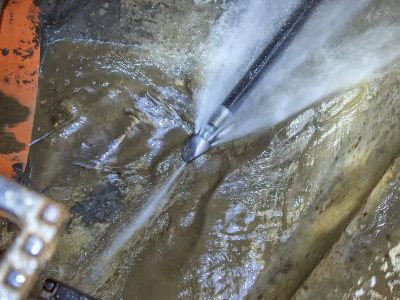
High-Pressure Water Jetting
When snaking your septic lines only provides temporary relief, professional high-pressure water …

Norweco Singulair Green
When your lot is too small, too wet, or too rocky for a standard septic system, the Norweco …
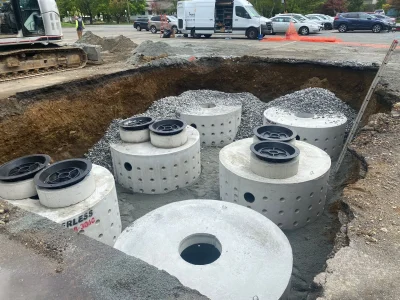
Septic Installation
When your septic system fails or you’re facing a mandatory replacement for a home sale, you …
Do you have a completed septic design or a septic inspection report you want to share?