

Key takeaways:
The sand layer in your septic drain field acts as the final filtration barrier—poor-quality sand with silt or clay causes clogs, backups, and premature system failure.
Spec-grade septic sand ensures proper drainage, prevents nutrient contamination of groundwater, and can extend your system’s lifespan by 10–15 years compared to substandard materials.
Working with a septic company that uses quality materials from day one protects your investment and avoids costly repairs down the line—ask what grade of sand they’re using before you sign.
When you’re investing $15,000 to $30,000 in a new septic system for your Sparta home, you’re probably focused on the big-ticket items: the tank size, the drain field layout, the permitting process. But there’s one component that rarely gets discussed—and it’s the difference between a system that lasts 30 years and one that fails in 15.
That component? The sand.
Not just any sand—spec-grade septic sand that meets strict standards for grain size, cleanliness, and drainage performance. It’s the final filtration layer in your drain field, and if it’s not the right quality, your entire system is compromised from day one.
Here’s why choosing a septic company that uses good quality sand isn’t just a nice-to-have—it’s essential for protecting your investment, your property, and your family’s health.
What Septic Sand Actually Does (And Why Most Homeowners Never Think About It)
Your septic system works in stages. Wastewater flows from your house into the septic tank, where solids settle to the bottom and oils float to the top. The clarified liquid—called effluent—then flows out into the drain field.
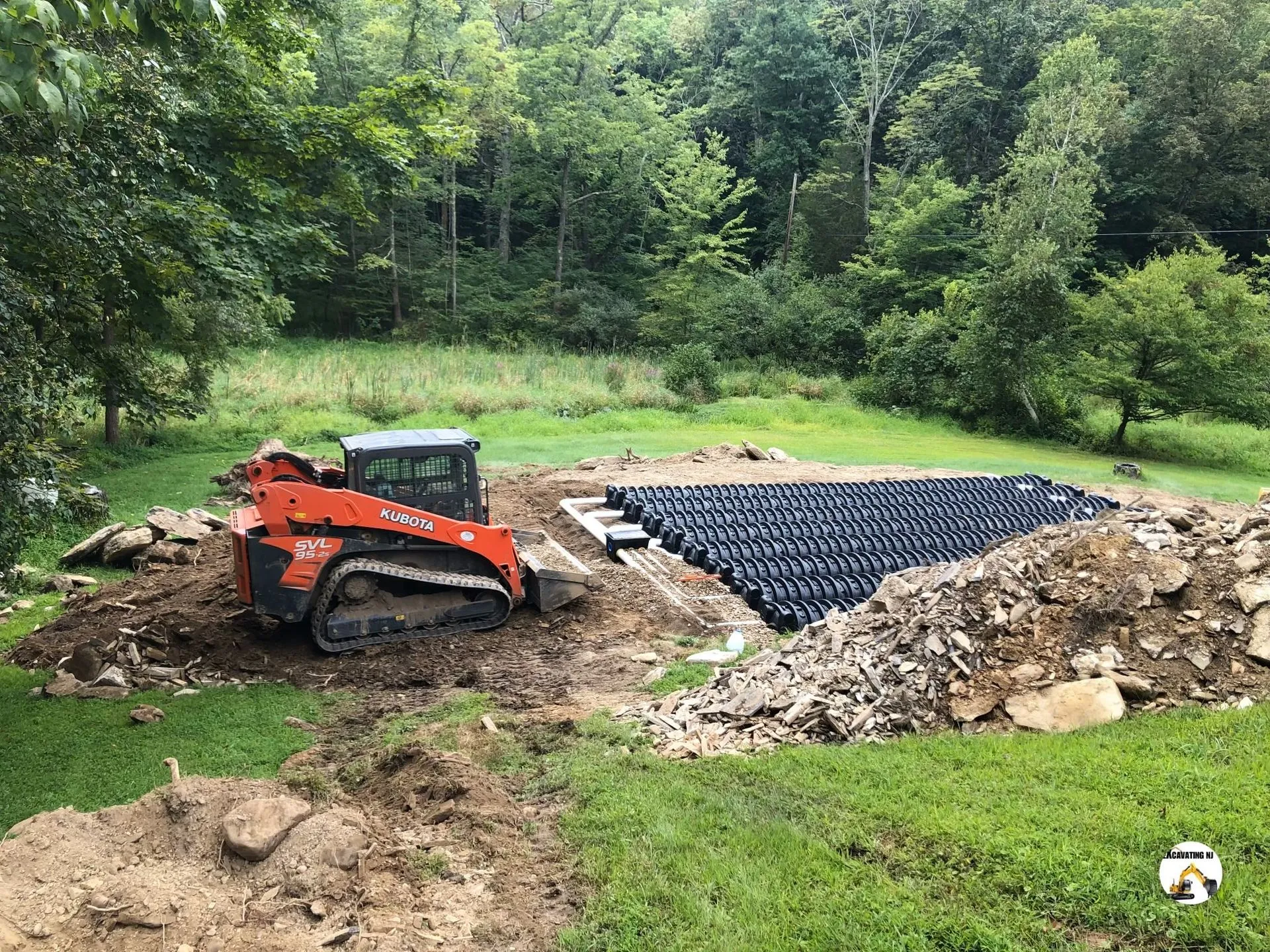
The drain field is where the real treatment happens. Perforated pipes distribute the effluent across trenches filled with gravel and sand. As the wastewater slowly percolates down through the sand layer, harmful bacteria and contaminants are filtered out before the water reaches the soil and eventually the groundwater table.
Think of the sand layer like a coffee filter. If the filter is clogged or made of the wrong material, nothing flows through properly. The same principle applies to your septic system.
When septic companies cut corners and use cheap, low-quality sand—or worse, sand mixed with silt and clay—the entire filtration process breaks down. The result? Clogs, backups, contaminated groundwater, and a system that fails years before it should.
“After nearly 20 years of septic installations across Sussex County, I’ve seen what happens when contractors use substandard materials to save a few bucks,” explains Mike White, owner of Excavating New Jersey LLC. “We only use spec-grade septic sand because we stand behind our work—and because we know it’s the right way to protect our customers’ investments.”
Problem #1: Poor Drainage Leads to System Backups
The primary job of septic sand is to provide consistent, reliable drainage. When effluent flows from the septic tank into the drain field, it needs to percolate down through the sand layer at a controlled rate—not too fast (which skips filtration) and not too slow (which causes pooling and backups).
Poor-quality sand doesn’t drain properly. If the sand contains high levels of silt or clay, it compacts over time and creates a barrier that slows or even blocks water flow. This is exactly what you don’t want.
When drainage slows down, effluent starts pooling in the drain field trenches. You’ll notice:
- Soggy, wet areas in your yard above the drain field
- Foul sewage odors around the system
- Slow drains inside your home
- Sewage backups into sinks, toilets, or showers
At this point, you’re looking at expensive repairs—or in severe cases, a complete drain field replacement. And if the system was only installed a few years ago? That’s a failure that could have been prevented with the right materials from the start.
If you’re experiencing any of these warning signs, contact a trusted septic repair service in Sparta to assess your system before the problem escalates.
Problem #2: Silt and Clay Cause Clogs That Destroy Your System
Here’s the technical detail that separates good septic sand from junk: grain size and composition.
Spec-grade septic sand is carefully sized and washed to remove fine particles. It’s typically a coarse sand with uniform grain size, which creates consistent pore spaces that allow water to flow through while trapping contaminants.
Low-quality sand, on the other hand, often contains silt and clay—fine particles that fill in the pore spaces and create a dense, impermeable layer. Over time, these fine particles accumulate and form a biological mat (called a biomat) that’s thicker and more clogged than it should be.
The result? Your drain field stops functioning.
Clogs caused by poor-quality sand lead to:
- Effluent backing up into the septic tank
- Overflows and surface pooling
- Contamination of the surrounding soil
- Complete system failure requiring replacement
Replacing a failed drain field can cost $10,000 to $20,000 or more—far more than the few hundred dollars a contractor might have saved by using cheap sand in the first place.
The takeaway: If a septic company isn’t willing to tell you exactly what grade of sand they’re using, that’s a red flag.
Problem #3: Contaminated Groundwater and Environmental Damage
Septic systems aren’t just about convenience—they’re about public health and environmental protection. When a septic system functions properly, it treats wastewater naturally and returns clean water to the groundwater table.
But when the sand layer fails to filter contaminants effectively, untreated effluent can seep into the soil and contaminate groundwater. This is especially concerning in areas like Sussex County, where many homes rely on private wells for drinking water.
Poor-quality sand reduces the system’s ability to absorb and filter nutrients like nitrogen and phosphorus. When these nutrients leach into groundwater or nearby streams and lakes, they can cause:
- Algae blooms and oxygen depletion in water bodies
- Contamination of drinking water wells
- Health risks for families and neighbors
- Violations of New Jersey environmental regulations
In New Jersey, septic systems must comply with the Standards for Individual Subsurface Sewage Disposal Systems (N.J.A.C. 7:9A), which establish minimum performance standards to protect public health and the environment. Using substandard materials like low-quality sand can put your system—and your property—at risk of non-compliance.
“We take environmental responsibility seriously,” says Mike. “Every septic system we install is designed and built to protect groundwater and meet or exceed New Jersey regulations. That starts with using the right materials, including quality sand that does its job for decades.”
Problem #4: Shortened System Lifespan Means Costly Replacements
A well-designed and properly installed septic system should last 25 to 30 years or more with regular maintenance. But when low-quality sand is used in the drain field, that lifespan can be cut in half.
Why? Because clogs, poor drainage, and contamination all accelerate wear and tear on the entire system. The septic tank works harder, the drain field becomes saturated, and components fail prematurely.
The math is simple: Spending a little more upfront on quality materials can save you tens of thousands of dollars in repairs and replacements down the line.
Here’s what quality septic sand delivers over the long term:
- Consistent drainage performance that prevents pooling and backups
- Effective filtration that protects groundwater and surrounding soil
- Reduced risk of clogs that cause system failures
- Extended system lifespan that maximizes your investment
At Excavating New Jersey LLC, we’ve seen the difference quality materials make. Systems we installed 15 or 20 years ago are still functioning perfectly because we used spec-grade sand and followed best practices from day one.
Not sure if your current system was built with quality materials? We offer free site evaluations to assess your septic system’s condition and identify potential issues before they become emergencies.
What Makes “Good Quality” Septic Sand?
So what should you look for when evaluating a septic company’s materials?
Spec-grade septic sand typically meets these standards:
- Grain size: Coarse sand with uniform particle size (usually 0.25mm to 2mm)
- Cleanliness: Washed and free of silt, clay, and organic matter
- Drainage performance: High permeability that allows consistent water flow
- Compliance: Meets or exceeds local and state specifications for septic installations
Some contractors use “fill sand” or “mason sand” because it’s cheaper and more readily available. These materials are not suitable for septic drain fields. They contain too many fine particles and will cause the problems we’ve outlined above.
When you’re getting quotes for septic installation or replacement, ask the contractor:
- What grade of sand do you use in the drain field?
- Does it meet New Jersey septic system specifications?
- Can you provide documentation or material specs?
If they can’t give you a clear answer—or if they downplay the importance of sand quality—keep looking.
Why We Only Use Spec-Grade Sand (And Why You Should Care)
At Excavating New Jersey LLC, we’ve built our reputation on doing things the right way. That means using quality materials, following best practices, and standing behind our work for the long term.
“We only use spec-grade septic sand because we care about the longevity of your system,” explains Mike. “We’re not interested in cutting corners to save a few dollars—because we know those shortcuts come back to haunt homeowners years later. Our customers trust us to build systems that last, and that starts with using the right materials from day one.”
We’ve been serving Sparta, Wantage, Vernon, and all of Sussex County for nearly 20 years. We’re licensed, insured, and certified septic installers who take pride in delivering reliable, compliant systems that protect your property and your investment.
When you work with us, you get:
- Transparent, upfront pricing with free flat-rate estimates
- Quality materials including spec-grade septic sand that meets or exceeds New Jersey standards
- Complete, start-to-finish service from design and permitting through installation and final inspection
- Local expertise backed by nearly two decades of experience in Sussex County
We also offer flexible payment options, including pay-at-closing and 203K loan compatibility, to make quality septic installation accessible and stress-free.
Protect Your Investment: Choose a Septic Company That Does It Right
Your septic system is one of the most important—and expensive—components of your home. Don’t let a contractor’s decision to use cheap sand compromise your investment.
When you’re evaluating septic companies for installation, repair, or replacement, ask about materials. Make sure they’re using spec-grade septic sand that meets New Jersey standards. And choose a company with a proven track record of quality work and long-term reliability.
At Excavating New Jersey LLC, we’ve built hundreds of septic systems across Sussex County—and we stand behind every one of them. Our commitment to quality materials and professional craftsmanship means you get a system that works reliably for decades.
Frequently Asked Questions
What is septic sand and why does it matter?
Septic sand is a coarse, washed sand used in the drain field (leach field) of a septic system. It acts as the final filtration layer, removing contaminants from wastewater before it reaches the soil and groundwater. Good quality septic sand ensures proper drainage, prevents clogs, and protects groundwater from contamination. Poor-quality sand with silt or clay can cause system backups, premature failure, and environmental damage. Spec-grade septic sand that meets New Jersey standards is essential for a long-lasting, compliant system.
How can I tell if my drain field sand is failing?
Signs that your drain field sand (and overall drain field) may be failing include: soggy or wet areas in your yard above the drain field, foul sewage odors around the system, slow drains inside your home, sewage backups into sinks or toilets, and lush, overly green grass over the drain field. These symptoms indicate that effluent is not draining properly through the sand layer and may be pooling or surfacing. If you notice any of these signs, contact a licensed septic service provider in Sussex County for an inspection before the problem worsens.
Does using quality septic sand really extend the life of my system?
Yes. Using spec-grade septic sand that meets proper specifications can extend your septic system’s lifespan by 10 to 15 years or more compared to systems built with substandard materials. Quality sand provides consistent drainage, prevents clogs caused by silt and clay, and ensures effective filtration of contaminants. This reduces stress on the entire system and minimizes the risk of premature failure. Over a 25- to 30-year lifespan, the small upfront investment in quality sand pays for itself many times over by avoiding costly repairs and replacements.
 Why Your Septic System Needs Spring Attention (Not Just Your Gutters)