

Key Takeaways
- Proper septic system installation in New Jersey requires navigating a structured permitting process that includes site evaluation, soil testing, system design, and multiple inspections to ensure compliance with state regulations.
- Working with licensed, experienced professionals like Excavating New Jersey LLC provides valuable expertise throughout the permitting and installation process, helping to avoid common pitfalls and ensuring a properly functioning system.
- Regular maintenance, including pumping every 3-5 years, responsible water usage, and protecting the drainfield area, is essential for maximizing the lifespan of your septic system and preventing costly septic repairs.
Understanding the Septic Tank Installation and Permitting Process for New Jersey Homeowners
When it comes to installing a septic system for your New Jersey property—whether you’re planning a new septic system in Wantage or elsewhere—navigating the permitting process is just as important as the installation itself. A properly permitted and installed septic system ensures your property’s waste management needs are met while complying with all state and local regulations. At Excavating New Jersey LLC, we understand that this process can seem overwhelming, which is why we’re committed to guiding you through every step with our nearly two decades of expertise.
The septic system installation process involves several critical stages, from initial site evaluation and design to permitting, installation, and final inspection. Each step requires careful attention to detail and compliance with New Jersey’s specific regulations to ensure your system functions properly for years to come. With our team of licensed and certified professionals, we provide comprehensive septic installation services that take the guesswork out of this complex process.
Let’s explore the essential steps involved in septic system installation and permitting in New Jersey, helping you understand what to expect and how to ensure a smooth, compliant installation for your property.
Understanding Septic Systems and Their Importance
Before diving into the permitting process, it’s essential to understand what a septic system is and why proper installation is crucial. A septic system is an underground wastewater treatment structure commonly used in rural areas without centralized sewer systems. These systems treat and dispose of household wastewater through a combination of natural processes and proven technology.
The standard septic system consists of several key components working together to process waste effectively. The septic tank, typically made of concrete, fiberglass, or polyethylene, receives all wastewater from your home. Inside this tank, solids settle to the bottom forming sludge, while oils and grease float to the top as scum. The clarified liquid in the middle, known as effluent, flows from the tank into the drainfield for further treatment as it percolates through the soil.
“Using the latest technology, we provide reliable septic system installations, ensuring all necessary permits are obtained. Our service is designed to be hassle-free from start to finish,” explains Mike, owner of Excavating New Jersey LLC, who brings over 20 years of experience to every septic tank installation project.
Various types of septic systems exist to accommodate different site conditions and requirements. Conventional systems with gravity flow are most common, but alternative systems such as pressure distribution, mound systems, and aerobic treatment units may be necessary depending on soil conditions and site constraints. Each type has specific design requirements that must be addressed during the permitting process.
The importance of proper septic system installation cannot be overstated. A well-designed and installed system protects public health by preventing groundwater contamination and surface water pollution. It safeguards your property value and helps avoid costly repairs or replacements down the line. Additionally, a properly functioning septic system is essential for maintaining a healthy living environment for your family and neighbors.
In New Jersey, septic system installation and design must comply with the Standards for Individual Subsurface Sewage Disposal Systems (N.J.A.C. 7:9A), which are enforced by local health departments and the New Jersey Department of Environmental Protection (NJDEP). These regulations establish minimum standards for septic system design, installation, and operation to protect public health and the environment.
Understanding these basics helps homeowners appreciate why the permitting process is so rigorous and why working with experienced professionals like Excavating New Jersey LLC is crucial for a successful septic system installation. Our team stays updated on all regulatory requirements and best practices to ensure your septic system is not only compliant but also optimized for your specific property conditions.
The Septic System Permitting Process in New Jersey
The permitting process for septic system installation in New Jersey follows a structured sequence designed to ensure compliance with state regulations and protect public health and the environment. Understanding this process is essential for anyone planning to install a septic tank or complete a septic system installation in New Jersey.
The first step in the permitting process involves submitting an application to your local health department. In New Jersey, the administrative authority for septic systems typically resides with county health departments, though some municipalities may have their own health departments with jurisdiction. This initial application generally requires basic information about the property, proposed system, and the licensed professionals involved in the project.
Following application submission, a site evaluation must be conducted to assess soil conditions and determine the property’s suitability for a septic system. This evaluation includes soil testing, commonly known as a percolation test or “perc test,” which measures how quickly water moves through the soil. According to New Jersey regulations, this testing must be performed by a licensed professional engineer, certified professional soil scientist, or other qualified professional.
“Our team offers comprehensive services from initial design to final installation, ensuring compliance with all local codes,” notes Mike from Excavating New Jersey LLC. This expertise is particularly valuable during the soil testing phase, as proper interpretation of results is crucial for system design.
Based on the site evaluation results, a detailed septic system design must be developed and submitted for review. New Jersey regulations (N.J.A.C. 7:9A) establish specific requirements for septic tank size, drainfield dimensions, and setback distances from wells, property lines, and water bodies. The design must be prepared by a licensed professional engineer and include detailed specifications for all system components.
Once the design is submitted, the health department reviews the application package to ensure compliance with all applicable regulations. This review process typically takes several weeks, though timeframes can vary depending on the department’s workload and the complexity of the proposed system. If the design meets all requirements, a construction permit is issued, allowing installation to proceed.
During the installation phase, inspections are required at various stages to verify compliance with the approved plans. These inspections typically occur before the system is backfilled, allowing officials to verify proper component placement, connections, and elevations. For this reason, it’s essential to work with experienced septic system installers who understand the inspection requirements and can schedule them appropriately.
After installation is complete and all inspections are passed, a final approval or certificate of compliance is issued. This document confirms that the system was installed according to the approved plans and meets all regulatory requirements. In New Jersey, this final approval is necessary before the system can be put into use.
Throughout this process, working with knowledgeable professionals like Excavating New Jersey LLC can make a significant difference in navigating the permitting requirements efficiently. Our experience with local health departments and thorough understanding of New Jersey’s septic regulations helps ensure a smooth permitting process and compliant installation.
Site Evaluation and Soil Testing Requirements
A thorough site evaluation and soil testing are foundational elements of the septic system permitting process in New Jersey. These assessments provide critical information about your property’s ability to support a septic system and inform the system’s design specifications. Understanding these requirements helps property owners prepare for this essential step in the septic system installation process.
The site evaluation begins with a comprehensive property assessment to identify suitable locations for the septic system components. This assessment considers various factors, including topography, existing structures, property boundaries, wells, water bodies, and other features that might impact system placement. New Jersey regulations establish specific setback requirements from these features to protect water quality and public health.
“Our experienced team handles all aspects of site work, from excavation to foundation installation, ensuring projects are completed on time and to specification,” explains Mike, owner of Excavating New Jersey LLC. This expertise is particularly valuable during the site evaluation phase, as identifying the optimal system location requires both technical knowledge and practical experience.
Soil testing, often referred to as a percolation test or “perc test,” is a critical component of the site evaluation. This test measures how quickly water moves through the soil, which directly impacts the drainfield’s size and design. In New Jersey, soil testing must follow specific protocols outlined in N.J.A.C. 7:9A and must be conducted by qualified professionals such as licensed engineers or certified soil scientists.
The soil evaluation typically involves digging test pits to examine the soil profile and identify limiting factors such as seasonal high water table, bedrock, or impermeable soil layers. These factors determine the minimum separation distance required between the bottom of the drainfield and limiting conditions. New Jersey regulations require at least two feet of suitable soil beneath the drainfield to ensure proper wastewater treatment.
In addition to percolation rates and soil profiles, the evaluation must also identify the soil texture and structure. These characteristics affect the soil’s ability to treat wastewater effectively and must be documented in the permit application. The soil evaluation results are then used to calculate the required size of the drainfield based on the anticipated wastewater flow and the soil’s absorption capacity.
For properties with challenging soil conditions, alternative system designs may be necessary. These might include mound systems, pressure dosing systems, or advanced treatment units that provide additional treatment before wastewater enters the soil. The need for these alternatives is determined during the site evaluation phase, highlighting the importance of thorough testing.
The site evaluation and soil testing results must be documented and submitted with the permit application. This documentation typically includes soil logs, percolation test results, a site plan showing proposed system location and setbacks, and any other information required by the local health department. Working with experienced professionals ensures this documentation is complete and accurate, reducing the likelihood of permit delays or denials.
At Excavating New Jersey LLC, we coordinate all aspects of site evaluation and soil testing, working with qualified professionals to ensure compliance with New Jersey regulations. Our comprehensive approach helps streamline the permitting process and provides the foundation for a properly designed septic system that will serve your property reliably for years to come.
Septic System Design and Engineering Considerations
Proper septic system design and engineering are crucial elements of a successful installation that complies with New Jersey regulations while meeting your property’s specific needs. This phase of the process translates the site evaluation data into a comprehensive system design that will form the basis of your permit application and subsequent installation.
In New Jersey, septic system design must be completed by a licensed professional engineer who understands the state’s regulatory requirements. The design process begins with determining the appropriate system size based on anticipated wastewater flow. For residential properties, this is typically calculated based on the number of bedrooms, with each bedroom representing a potential occupancy of two persons. New Jersey regulations specify minimum septic tank capacities based on these calculations to ensure adequate treatment capacity.
“We specialize in septic engineering and design, offering comprehensive services from initial design to final installation, ensuring compliance with all local codes,” states Mike, the owner of Excavating New Jersey LLC. This expertise is essential for developing designs that not only meet regulatory requirements but also optimize system performance and longevity.
The septic tank design must include specifications for materials, dimensions, access ports, and baffles or tees at the inlet and outlet. New Jersey regulations require tanks to be watertight and structurally sound, with specific requirements for concrete, fiberglass, or polyethylene tanks. The design must also include provisions for effluent filters to prevent solids from entering the drainfield, extending the system’s lifespan.
Drainfield design is perhaps the most critical aspect of septic system engineering. Using soil testing results, the engineer calculates the required drainfield size based on the soil’s percolation rate and the anticipated daily wastewater flow. The design must specify the type of distribution system (gravity or pressure), trench or bed dimensions, and the type and configuration of distribution piping and aggregate materials.
For properties with challenging site conditions, alternative system designs may be necessary. These might include mound systems for high water tables, pressure distribution for slowly permeable soils, or advanced treatment units for environmentally sensitive areas. Each alternative requires specialized design considerations and must comply with specific regulatory requirements outlined in N.J.A.C. 7:9A.
The complete design package must include detailed plans showing the system layout, component specifications, and construction details. These plans typically include:
- Site plan showing system location and setbacks from wells, property lines, and water bodies
- System profile showing elevations of all components
- Construction details for the septic tank, distribution box, and drainfield
- Specifications for all materials and components
- Calculations supporting the system sizing
In addition to these technical elements, the design must consider practical aspects of installation and maintenance. This includes providing adequate access for future pumping and maintenance, ensuring proper venting to prevent odors, and incorporating inspection ports to monitor system performance. A well-designed system balances regulatory compliance with practical considerations to ensure optimal function and ease of maintenance.
At Excavating New Jersey LLC, we work closely with qualified engineers to develop septic system designs that meet all regulatory requirements while addressing your property’s unique characteristics. Our collaborative approach ensures that the design not only satisfies permitting requirements but also results in a system that will provide reliable service for decades to come.
The Installation Process: Step-by-Step Guide
Once your septic system permit has been approved, the installation process can begin. This phase requires careful coordination and adherence to the approved plans to ensure a compliant and functional system. At Excavating New Jersey LLC, we follow a systematic approach to septic tank installation and septic system installation that minimizes disruption while ensuring quality results.
The installation process typically begins with site preparation, which includes marking the system location, identifying underground utilities, and establishing erosion controls if necessary. This preparatory work is essential for a smooth installation and helps prevent unexpected issues during excavation. Our team coordinates with utility marking services to ensure all underground lines are identified before any digging begins.
“Our team offers fast and efficient services, preventing further issues and ensuring your system functions smoothly,” explains Mike, who leads Excavating New Jersey LLC with over 20 years of industry experience. This efficiency is particularly important during the installation phase, where proper sequencing and attention to detail are critical.
The excavation phase follows site preparation and involves digging the holes for the septic tank and drainfield according to the approved plans. The excavation must achieve the correct depths and dimensions to ensure proper system function. For the septic tank, the excavation must allow for the specified bedding material (typically sand or gravel) and provide enough space for proper backfilling around the tank.
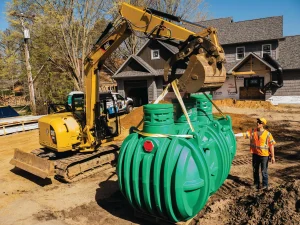
Once excavation is complete, the tank installation begins. The tank is carefully placed in the excavation on a level bed of appropriate material, usually sand or crushed stone. Proper leveling is critical to ensure wastewater flows correctly through the system. For concrete tanks, which are commonly used in New Jersey, special equipment is required for safe placement due to their substantial weight.
After the tank is positioned, the inlet and outlet pipes are connected, ensuring proper alignment and watertight seals. In New Jersey, these connections must comply with specific requirements to prevent leakage and ensure long-term durability. Access risers are typically installed to bring the access ports to or near the ground surface, facilitating future maintenance and inspections.
The drainfield installation follows the tank placement and involves creating trenches or beds according to the approved design. Distribution pipes are placed in these excavations on a bed of specified aggregate material, typically washed gravel or an approved alternative. The pipes must be installed at the correct elevation and slope to ensure proper effluent distribution throughout the drainfield.
Throughout the installation process, various inspections are required by local health authorities. These typically include:
- Pre-cover inspection of the tank and connections
- Drainfield inspection before covering the distribution pipes
- Final inspection of the completed system
These inspections verify that the installation complies with the approved plans and meets all regulatory requirements. At Excavating New Jersey LLC, we coordinate these inspections and ensure all aspects of the installation are ready for review at each stage.
After passing all required inspections, the system is carefully backfilled to prevent damage to components and establish proper grades around the system. Final grading ensures surface water drains away from the system, preventing infiltration that could compromise performance. We take care to minimize soil compaction over the drainfield, which could reduce its effectiveness.
The final step involves system startup and homeowner education. We explain how the system works, what maintenance is required, and what practices to avoid to ensure long-term performance. This education is an essential part of our service, as proper use and maintenance are critical for system longevity.
Navigating Common Challenges and Solutions
Even with careful planning and professional assistance, septic system installation and permitting can present challenges that require innovative solutions. Understanding these potential obstacles and how to address them can help homeowners prepare for a smoother process. At Excavating New Jersey LLC, our extensive experience has equipped us to navigate these challenges effectively.
One common challenge involves difficult soil conditions that may limit conventional septic system options. New Jersey’s diverse geology means some properties have high water tables, shallow bedrock, or poor percolation rates that complicate system design. When these conditions are encountered during site evaluation, alternative system designs may be necessary.
“We provide specialized drainage solutions to prevent water buildup and protect foundations, including the installation of French drains and regrading services,” notes Mike, highlighting how Excavating New Jersey LLC addresses challenging site conditions. For properties with high water tables, solutions might include mound systems that create the necessary separation distance between the drainfield and groundwater, or pressure distribution systems that enhance treatment in marginal soils.
Limited available space for the septic system can also present challenges, particularly on smaller lots or properties with multiple constraints such as wells, wetlands, or steep slopes. New Jersey regulations establish minimum setback distances from these features, which can significantly restrict the available area for system placement. In these cases, creative design solutions and sometimes variance requests may be necessary.
When space is limited, compact system designs such as chamber systems or advanced treatment units may be considered. These alternatives often require less space than conventional systems while still providing effective treatment. Our team works closely with engineers to identify the most appropriate solution for each property’s unique constraints.
Permit delays represent another common challenge in the septic system installation process. These delays can result from incomplete applications, staffing limitations at health departments, or requests for additional information. To minimize such delays, thorough preparation and professional assistance are invaluable.
At Excavating New Jersey LLC, we help clients prepare complete permit applications with all required documentation, reducing the likelihood of requests for additional information. Our familiarity with local health department requirements and procedures allows us to anticipate potential questions and address them proactively, streamlining the permitting process.
Cost concerns are frequently cited by homeowners planning septic system installations. While the investment in a properly designed and installed system is significant, cutting corners can lead to much higher costs in the future. We help clients understand the value of quality components and proper installation while identifying opportunities for cost efficiency without compromising system integrity.
“We offer free flat-rate estimates and competitive pricing, ensuring no surprises on your bill,” explains Mike, emphasizing Excavating New Jersey LLC’s commitment to transparent pricing. Additionally, we accept 203K loans, allowing clients to pay at closing and ease the financial burden of necessary repairs or installations.
Weather and seasonal constraints can also impact septic system installation schedules. Excessive rainfall, frozen ground, or extremely dry conditions can all affect excavation and installation activities. We monitor weather conditions closely and schedule installations during optimal periods whenever possible. When delays are unavoidable, we communicate proactively with clients and adjust schedules accordingly.
By anticipating these common challenges and developing effective solutions, Excavating New Jersey LLC helps clients navigate the septic system installation and permitting process with minimal stress and optimal results. Our problem-solving approach, combined with technical expertise and regulatory knowledge, ensures successful outcomes even for complex projects.
Maintenance and Care for Your New Septic System
After successfully navigating the permitting process and completing your septic system installation, proper maintenance becomes essential for ensuring long-term performance and compliance with New Jersey regulations. A well-maintained septic system can function effectively for decades, while neglected systems may fail prematurely, leading to costly repairs or replacement.
Regular pumping is perhaps the most important maintenance activity for septic systems. The frequency depends on household size, water usage, and tank capacity, but most residential systems in New Jersey should be pumped every 3-5 years. During pumping, a professional inspects the tank’s condition, checks baffles and filters, and identifies any potential issues before they become serious problems.
“Our team offers fast and efficient repair services for damaged septic systems, preventing further issues and ensuring your system functions smoothly,” explains Mike from Excavating New Jersey LLC. Regular maintenance helps identify minor issues before they escalate into major repairs, saving homeowners significant expense and inconvenience.
Water conservation plays a crucial role in septic system health. Excessive water use can overwhelm the system, reducing treatment effectiveness and potentially causing drainfield failure. Simple practices like fixing leaky fixtures, spreading laundry loads throughout the week, and installing water-efficient appliances can significantly reduce the strain on your septic system.
What goes down your drains also impacts septic system performance. Harsh chemicals, grease, non-biodegradable items, and excessive amounts of household cleaners can disrupt the bacterial activity essential for waste breakdown. Homeowners should avoid flushing anything other than toilet paper and human waste, and should use septic-safe cleaning products whenever possible.
Protecting the drainfield is another critical aspect of septic system maintenance. The drainfield area should remain clear of structures, heavy equipment, vehicles, and deep-rooted vegetation that could damage the distribution pipes or compact the soil. Surface water should be directed away from the drainfield to prevent saturation that could compromise treatment efficiency.
In New Jersey, maintaining accurate records of your septic system is not just good practice—it’s often required for property transfers and system alterations. These records should include the original permit, as-built drawings showing the system location and components, pumping receipts, inspection reports, and any repairs or modifications. Excavating New Jersey LLC provides clients with comprehensive documentation of new installations to establish this important record-keeping practice.
Seasonal considerations are particularly relevant in New Jersey’s climate. Winter presents unique challenges for septic systems, including the potential for freezing components if they’re not properly insulated. Maintaining a layer of snow over the system can provide natural insulation, while avoiding plowing or shoveling that area helps prevent frost penetration. For systems that have experienced freezing issues, professional solutions such as additional soil cover or insulation may be recommended.
Regular professional inspections complement homeowner maintenance activities by identifying potential issues before they become apparent through system failure. These inspections typically include assessing sludge and scum levels, checking for leaks or damage, evaluating drainfield condition, and verifying proper function of all components. For newer systems with advanced treatment units or pumps, more frequent professional maintenance may be required per manufacturer specifications and New Jersey regulations.
By following these maintenance guidelines and working with experienced professionals like Excavating New Jersey LLC for regular service, homeowners can protect their investment in a new septic system and ensure it provides reliable, compliant service for many years to come. Our team is always available to answer maintenance questions and provide the services needed to keep your system functioning optimally.
Working with Professional Septic System Installers
Choosing the right septic system installer is perhaps the most important decision you’ll make in the entire septic installation process. The quality of installation directly impacts system performance, longevity, and compliance with New Jersey regulations. Working with experienced professionals like Excavating New Jersey LLC offers numerous advantages that can save time, money, and frustration throughout the project.
Licensed and certified installers bring essential expertise to septic system projects. In New Jersey, septic system installers must be registered with the New Jersey Department of Environmental Protection and demonstrate knowledge of state regulations and industry best practices. When evaluating potential installers, homeowners should verify these credentials and ask about specific experience with systems similar to what they’re planning.
“Licensed, insured, and certified: Our team is fully qualified and dedicated to providing safe and efficient services,” states Mike, owner of Excavating New Jersey LLC, highlighting the importance of proper qualifications. This professional standing not only ensures compliance with regulations but also provides homeowners with important protections should issues arise during or after installation.
Professional installers like Excavating New Jersey LLC offer comprehensive services that address all aspects of the septic system installation process. Rather than coordinating multiple contractors for different phases, homeowners benefit from a single point of contact who manages the entire project from initial site evaluation through final inspection and approval. This integrated approach improves communication, reduces the potential for errors, and typically results in more efficient project completion.
The permitting process can be particularly challenging for homeowners unfamiliar with local requirements and procedures. Professional installers have established relationships with health departments and understand exactly what documentation is needed for permit approval. They can prepare and submit applications that meet all requirements, significantly reducing the likelihood of delays or denials due to incomplete or incorrect submissions.
“We are your one-stop shop for all excavation needs in New Jersey,” explains Mike, emphasizing the value of comprehensive service. This approach is particularly beneficial during the permitting process, where expertise in navigating regulatory requirements can prevent costly delays and ensure all necessary approvals are obtained.
Equipment access represents another significant advantage of working with professional installers. Septic system installation requires specialized equipment for excavation, tank placement, and precise grading. Professional installers maintain the necessary machinery and know how to use it efficiently and safely, reducing project duration and minimizing site disruption. This equipment access is particularly important for larger systems or installations in challenging locations.
Quality assurance is perhaps the most important benefit of professional installation. Experienced installers understand the critical details that determine system performance, from proper bedding materials and compaction techniques to precise elevations and connections. They follow established protocols for testing components before backfilling and ensure all aspects of the installation meet or exceed regulatory requirements.
After installation, professional installers provide valuable guidance on system operation and maintenance. They can explain how the system works, what maintenance is required, and what practices to avoid to ensure optimal performance. This education helps homeowners protect their investment and prevent premature system failures due to improper use or neglect.
At Excavating New Jersey LLC, we take pride in our professional approach to septic system installation. With nearly two decades of experience, our team has the knowledge, skills, and equipment to handle projects of any size or complexity. We manage all aspects of the process, from initial consultation through final approval, ensuring a hassle-free experience and a properly installed system that will provide reliable service for years to come.
FAQs
What are the key steps in the septic system permitting process in New Jersey?
The septic system permitting process in New Jersey follows a structured sequence that ensures compliance with state regulations. First, you’ll need to submit an application to your local health department, which serves as the administrative authority for septic systems in most areas. Following application submission, a site evaluation must be conducted by a licensed professional engineer or certified soil scientist to assess soil conditions through percolation testing. Based on these results, a detailed septic system design must be developed and submitted for review. This design must comply with N.J.A.C. 7:9A standards, which establish specific requirements for septic tank size, drainfield dimensions, and setback distances. Once the design is submitted, the health department reviews the application package, typically taking several weeks depending on workload and complexity. If approved, a construction permit is issued, allowing installation to begin. During installation, inspections are required at various stages to verify compliance with approved plans. After all inspections are passed, a final approval or certificate of compliance is issued, confirming the system meets all regulatory requirements and can be put into use. At Excavating New Jersey LLC, we guide clients through each step of this process, ensuring all requirements are met efficiently.
How much does a typical septic system installation cost in New Jersey?
The cost of septic system installation in New Jersey varies significantly based on several factors, including system type, site conditions, and local requirements. For a standard conventional system serving a typical single-family home, costs generally range from $15,000 to $30,000. This includes permitting, site evaluation, design, installation, and final approval. Alternative systems required for challenging site conditions, such as mound systems or advanced treatment units, typically cost more, ranging from $25,000 to $50,000 or higher, depending on complexity. Factors that can increase costs include difficult soil conditions, high water tables, limited space for system placement, extensive site clearing requirements, and long distances between the house and a suitable system location. At Excavating New Jersey LLC, we provide free flat-rate estimates that account for all aspects of your specific project, ensuring transparency and no surprises on your bill. We also accept 203K loans, allowing clients to pay at closing, which can ease the financial burden of this necessary investment. While the initial cost may seem substantial, a properly designed and installed septic system represents a long-term investment in your property’s infrastructure that can provide reliable service for decades with proper maintenance.
What are the common reasons for septic permit denial in New Jersey?
Several common issues can lead to septic permit denial in New Jersey, with soil conditions being the most frequent challenge. If percolation tests reveal excessively slow or fast drainage rates, or if the seasonal high water table is too close to the surface, the site may be deemed unsuitable for a conventional system. Inadequate separation distances represent another common reason for denial. New Jersey regulations establish minimum setbacks from wells, property lines, water bodies, and structures that must be maintained. If your property cannot accommodate these setbacks, a permit may be denied. Incomplete or incorrect application materials also frequently result in permit delays or denials. Missing soil test results, inadequate system designs, or insufficient documentation can all lead to rejection. System designs that fail to meet the standards outlined in N.J.A.C. 7:9A, such as undersized tanks or drainfields, improper elevation relationships between components, or inappropriate materials, will be denied. Property constraints such as insufficient suitable area for the required system size or excessive slope in the proposed installation area can also lead to permit denial. At Excavating New Jersey LLC, our thorough understanding of these requirements helps us identify potential issues early and develop appropriate solutions, significantly reducing the likelihood of permit denial.
How long does the septic system permitting process typically take in New Jersey?
The timeline for obtaining a septic system permit in New Jersey varies depending on several factors, but homeowners should generally plan for the process to take between 2-6 months from initial application to final approval. The site evaluation and soil testing phase typically requires 2-4 weeks to schedule and complete, depending on weather conditions and the availability of qualified professionals. Once soil testing is complete, system design development usually takes another 2-4 weeks, as engineers must carefully analyze test results and create detailed plans that comply with all regulations. After submission, the permit review process by local health departments typically takes 4-8 weeks, though this can vary significantly based on the department’s workload and the complexity of your proposed system. If revisions are requested, additional time will be needed to address these issues and resubmit. Seasonal factors can also impact timing, with many health departments experiencing higher volumes of applications in spring and summer. At Excavating New Jersey LLC, we help clients establish realistic timelines based on our experience with local health departments and current conditions. We also work to expedite the process where possible by ensuring complete, accurate submissions and maintaining good communication with regulatory officials throughout the review process.
What are the maintenance requirements for septic systems in New Jersey?
Proper maintenance is essential for septic system longevity and compliance with New Jersey regulations. Regular pumping is the most critical maintenance requirement, with most residential systems needing pumping every 3-5 years, depending on household size and water usage. During pumping, professionals should inspect the tank’s condition, check baffles and filters, and identify any potential issues. New Jersey regulations recommend maintaining accurate records of all maintenance activities, including pumping receipts and inspection reports. These records may be required during property transfers or system modifications. Water conservation is also important for system health, as excessive water use can overwhelm the system and reduce treatment effectiveness. Homeowners should practice responsible waste disposal, avoiding flushing anything other than toilet paper and human waste. Harsh chemicals, grease, and non-biodegradable items can disrupt the bacterial activity essential for waste breakdown. The drainfield area must be protected from structures, vehicles, and deep-rooted vegetation that could damage distribution pipes or compact soil. Surface water should be directed away from the drainfield to prevent saturation. For systems with advanced components such as pumps or treatment units, manufacturer-specified maintenance may be required more frequently. At Excavating New Jersey LLC, we provide clients with comprehensive guidance on maintenance requirements specific to their system and offer ongoing service to ensure optimal performance and regulatory compliance.
 Seasonal Septic Maintenance: Essential Care for Your Septic Tank Throughout the Year